Covet: Rain City Knits DK Merino Yarn

My very own Rain City Knits Babycakes DK sampler pack.

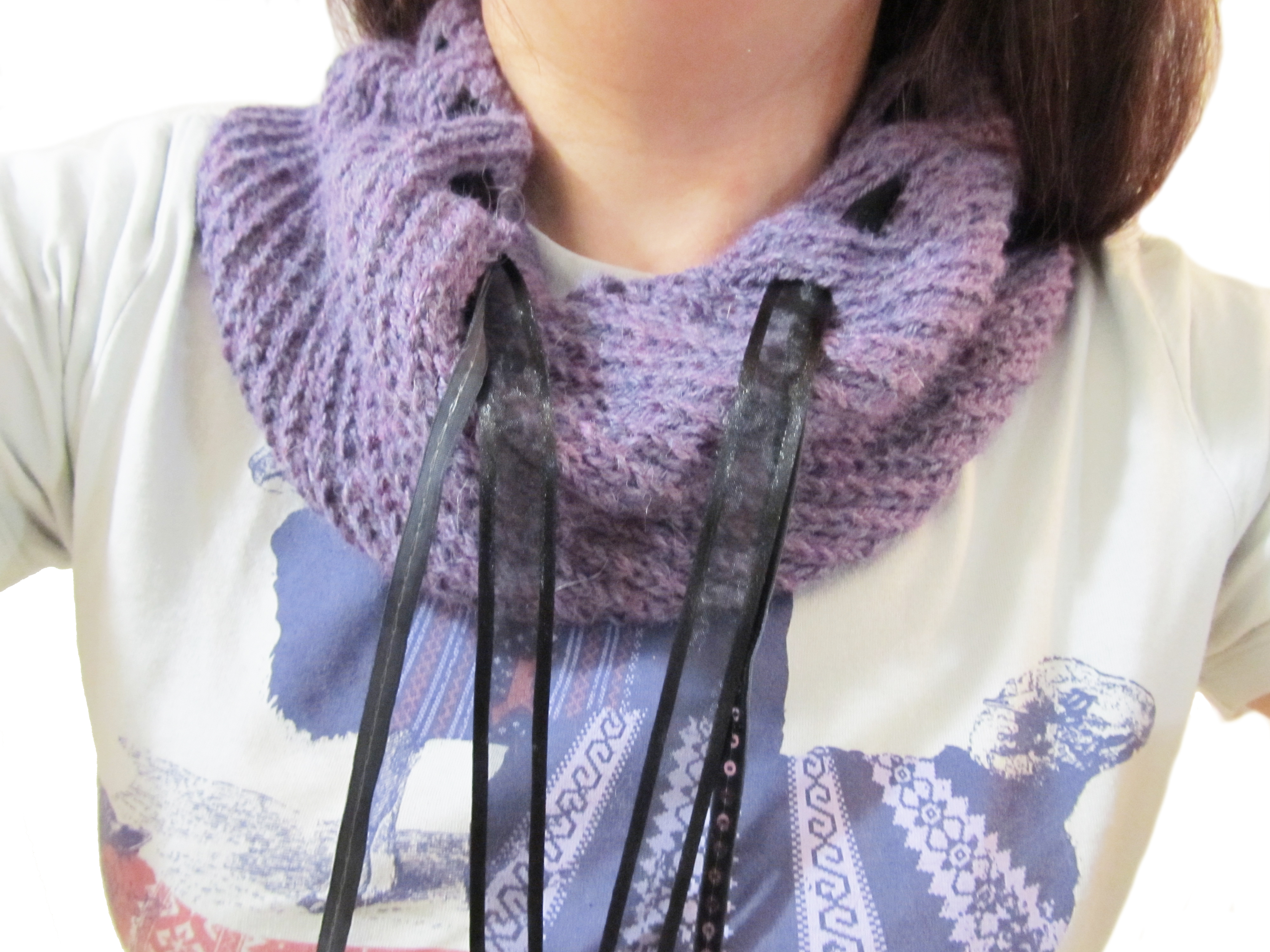
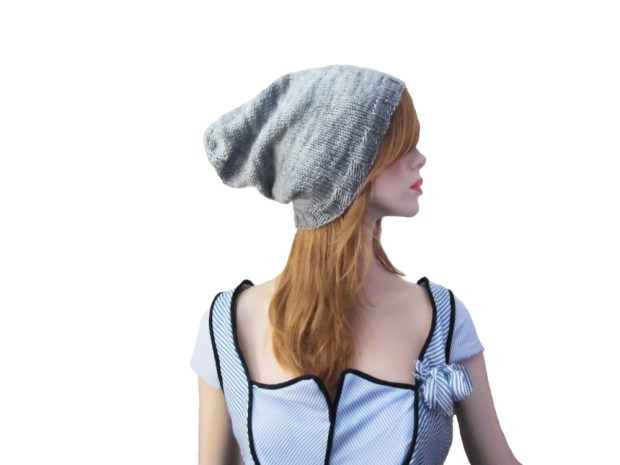
Guess what I’ve got? A buffet sample pack of Rain City Knits DK and several full size skeins for my designing and knitting pleasure! I am thrilled to bits. So much so that I decided to wear my skein of Steel Grey before turning it into a ball.

Me in Steel Grey.

Me in Steel Grey DK.

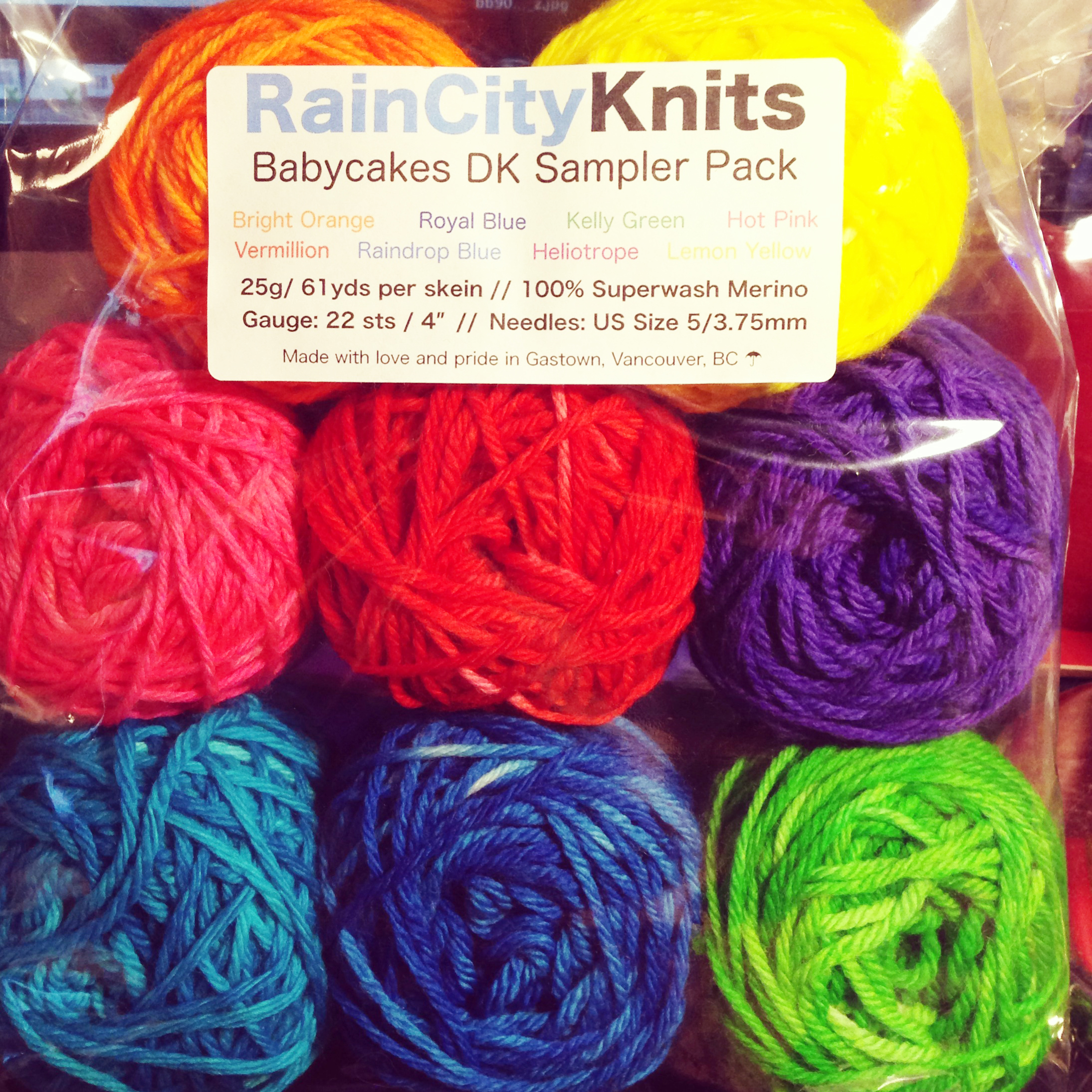
I am in love with the Rain City Knits DK. I totally recommend picking up a fabulous, colourful Babycakes sampler featuring 8 colours to play with. The colours are gorgeous and vivid. Each ball is 25g / 61 yds per skein in superwash merino. Colours included are Vermillion, Hot Pink, Bright Orange, Lemon Yellow, Heliotrope Purple, Kelly Green, Rain Drop Blue and Royal Blue.

babycakes sampler pack

Aside from the gorgeous signature colours from Rain City Knits, the DK yarn is delightfully soft and has a great spring to it. If you knit, you’ll know what I mean.

Steel grey DK skeins.

Steel grey DK skeins.

I am planning on using my Babycakes, along with Steel Grey, to design a garment. That’s all I’m telling you right now. I am already having lots of fun working with the yarn, turning it into balls from skein form.

dk2

Did I mention that the DK is sooo soft? I might’ve… One tip about making balls from yarn that I have for you is not to pull too tightly when hand winding. You don’t want to remove the spring of the yarn in your hand wound ball.

dk outside

I have started knitting up my Steel Grey and it has a lovely variegated look, which pleases me, as shown here under natural sunlight. I am alternating skeins as I knit, as I recommend with any variegated or kettle dyed yarn.  Truly this yarn is a delight to work with and I recommend that you pick some up from Rain City Knits to try out on your latest project.

x Rena

New Pattern: Granville Hat + Cowl

window_cropped

I’m happy to share that my latest pattern Granville is available for purchase on Ravelry and soon also on Etsy.  Granville features a ribbed brim edge and diagonal lace which slides closed with your favourite ribbon. So, when you untie the ribbon, Granville changes from a slouchy hat to a cowl.

granville 4

Special thanks go to my tech editor Katherine Vaughan who checks over my patterns and my Ravelry test knitters who did a great job. And thank you also to photographers Krista (of Rain City Knits) and Vasso who got some great pictures of Granville in action.

I hope you’ll try Granville out!

x Rena

Knitwear Fashion Illustration Tutorial

IMG_0860

Thinking out loud in my sketchbook for the Edinburgh Mittens.

Edinburgh Mittens in alpaca.

Result: Edinburgh Mittens.

My sketchbook is my brain… well, almost. With each design I create, I usually have a series of pages on how that design evolved. Often there are measurements and numbers, as in my photos for the Edinburgh Mittens and skirt. But there are always illustrations of the design, with variations here and there.

Not quite knitting, but same process for designing items for sewing too. Sketches and measurements everywhere.

Take for example a simple pullover. There’s so many questions that need to be answered in the sketch. How long is it? Where do the sleeves ends? What kind of neckline? And most importantly, where do I see this sitting on the body? So, most of the designs I have usually are based on simple croquis drawings to show how the garment fits and hangs on the body.

Croquis

A croquis illustration.

Now wait a second. What’s a croquis, you might be asking? A croquis is basically a quick illustration, typically a line drawing, of a real human figure. Usually these illustrations are made in a couple minutes, tops. Often enough, the same croquis outline is used to show a range of variations of the outfit or a series of outfits. You can even draw a croquis custom to your body or a model’s body to reflect the proportions of the garment.

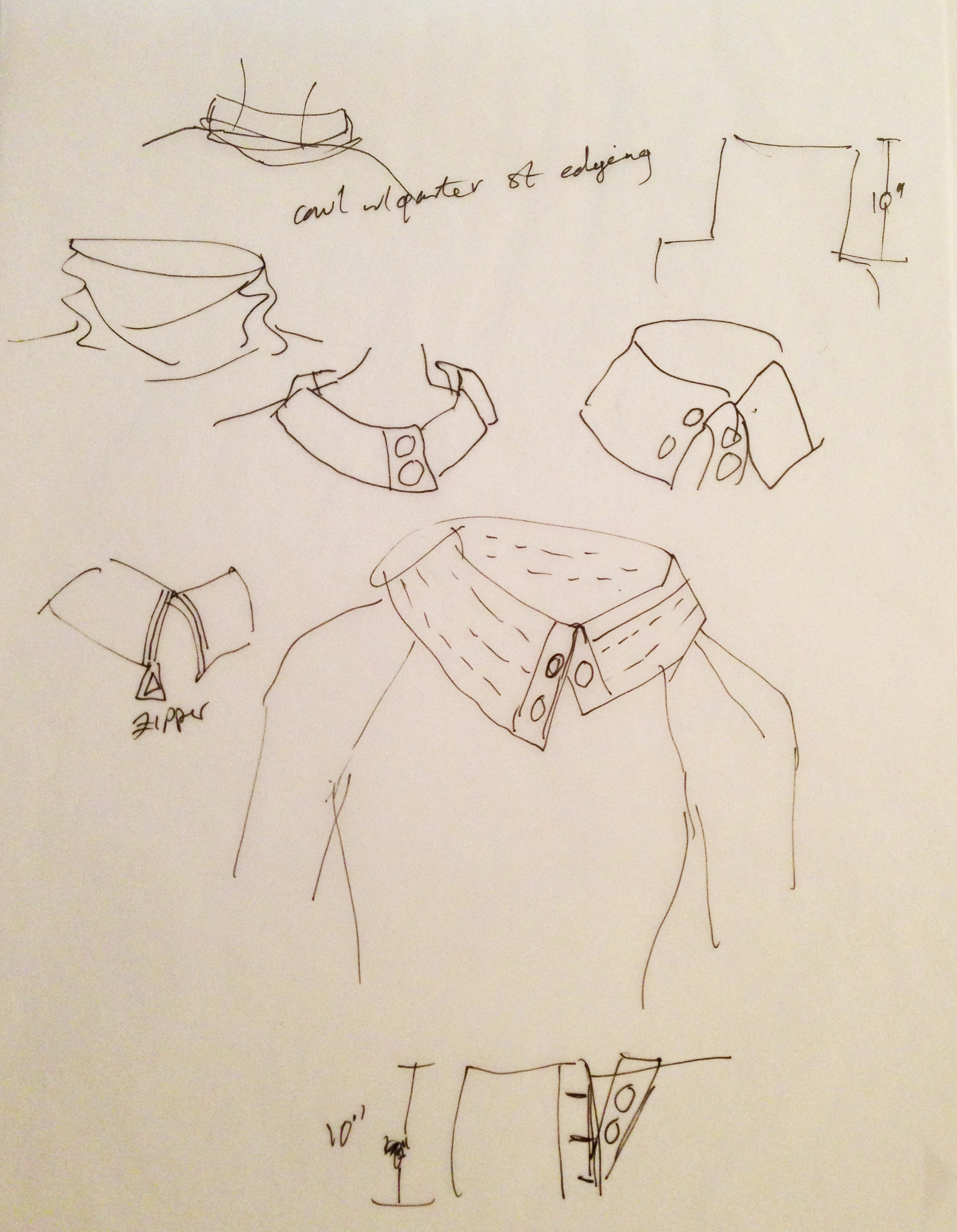
Searching for the right collar.

Once I’ve done a few runs at the croquis, I usually have a series of other sketches where I’m working out details, like finding the right collar shape for a pullover garment.

So how do you make a croquis to use as your base for illustration? Yes, you can find them already made online if you want to skip this step altogether. But there are many benefits to making your own croquis.  You can find your starting point by using either an existing photo showing your body or even a photograph of a figure from a fashion magazine.
blog 1

Here’s a list of supplies that you need to make your own croquis and fashion drawings:

  • photograph  / fashion photograph
  • tracing paper
  • ruler
  • pencil
  • black ink pen
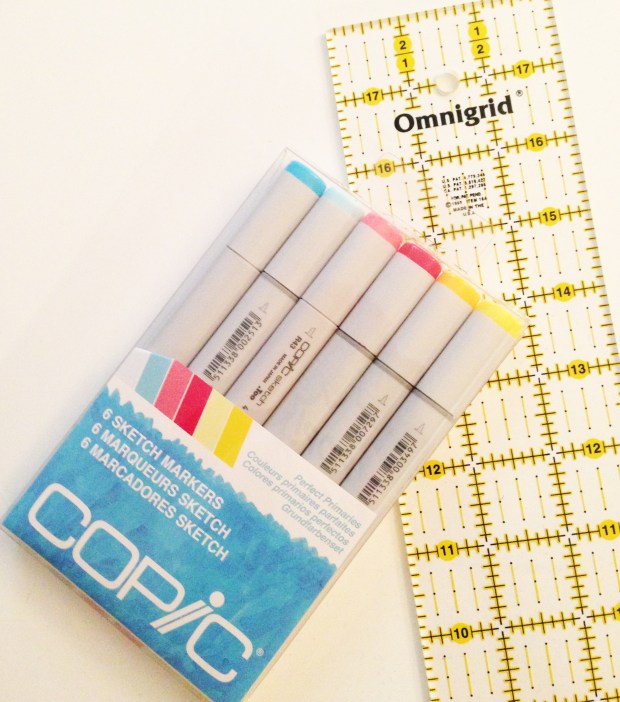
  • coloured markers (I like Copic)
blog 5

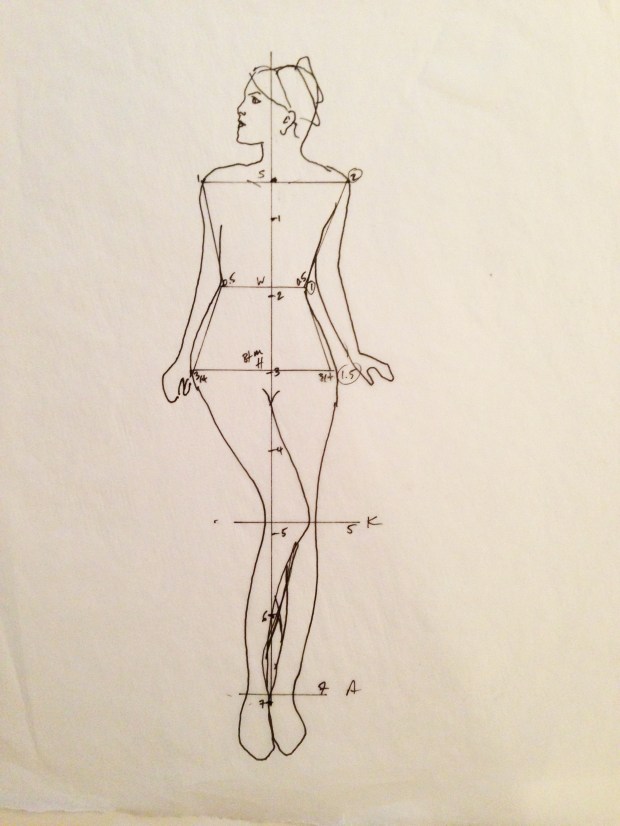
My original croquis. The numbers are head lengths and widths.

Place a sheet of tracing paper over the illustration and using your pen or pencil, trace the outline of the figure. It doesn’t need to be perfect, just a reasonable approximation. Draw a line across at the shoulders, bust, waist, hips, knees and ankles. You’re already starting to see some of the body proportions. Connect on the side the distance between the shoulder and waist, and then waist and hip, creating boxes like the shown croquis. Then, measure the the head height on a piece of paper, and use this to measure the total length of the figure, which should be around 7 heads high. You can also draw a vertical line through the core of the body, showing the midpoint. There’s a very handy video tutorial that’s about 10 minutes showing you in detail how to do this here.

Taking a second piece of tracing paper, trace the outline of the figure as your base. You can add as many notations from the base croquis that you’d like. For instance, you can show the waist line or centre line.  Then start drawing your garment over the figure, taking care to accurately show where your garment begins and ends and how you would like it to hang. Again, this isn’t a a perfect drawing, rather a quick drawing to help you design your garment.

blog 4

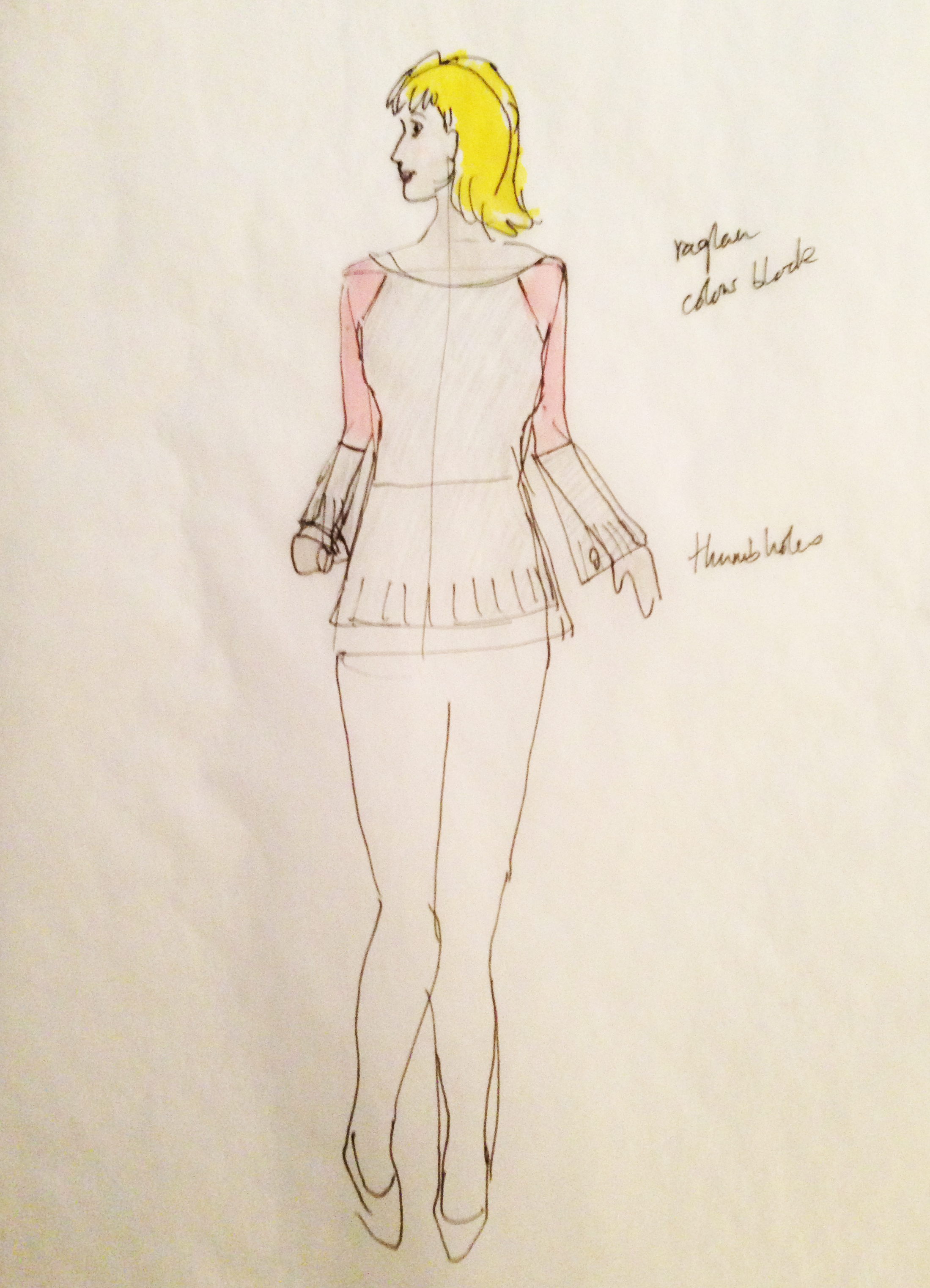
Then comes my favourite part, adding colour to the illustration, which really brings the drawing to life as you can see here. My pullover design (coming out very soon) shows the colour blocking, sleeve length and more. It’s really a handy reference for me.
sizing chart

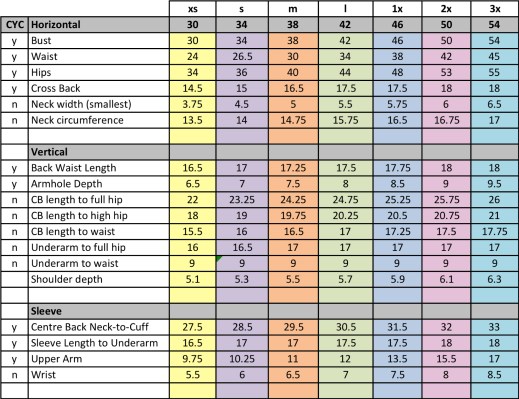
My custom sizing chart in inches as based on Craft Yarn Council standards and British standards as adapted by designer Ysolda Teague.

When I use my illustration combined with the Craft Yarn Council’s body standards sizing charts, things start really happening. I can then begin to consider actual measurements in relation to my drawing. Basically, knitwear design comes down to a lot of measurements, which brings me to Excel, which really is a whole other post about knitwear pattern grading to make different sizes. I’ll save that for another time!

Are you going to make some of your own drawings now?

x Rena
The Red Fox and Gown Does Facebook… and a Special Offer Too!

Sage Woodland Hood


If you’re not already a Facebook fan, please join us for the shenanigans on The Red Fox and Gown Page. I have a special promotion running for the month of May for Facebook fans who like our page.

Foxy Business Hat.

The deal is 15% off all of my designs on Ravelry for the month of May… but you need to check the page out to get the details about how to get the discount. 🙂

Star Slouch Hat.

Do check out the full catalogue of The Red Fox and Gown designs here.

x Rena

The Red Fox and Gown Blog Gets a New Look for Spring

geranium

You might’ve noticed that something is different around here today. I think it’s a carry over from the spring cleaning and organization bug that took hold last month. I decided it was time to freshen up the blog and give her a makeover.

I wanted to keep the minimalist feel but also introduce a sidebar where you can see top posts and pages, recent posts, archives and tags to more easily navigate the site. Along the top of the blog I’ve updated the ‘About’ and ‘Designs’ sections, and added the ‘Newsletter’ and ‘Social Media’ sections.

If you choose to visit the ‘Newsletter’ section, you’ll find out how to sign up for The Red Fox and Gown’s e-mail newsletter that comes out four times a year. There’s special offers and news and other goodies.

‘Social Media’, as you may have already guessed, is all about social media. Shrewd. I have put a list there for all of you Twitter and Facebook users, Instagram and Etsy details, and last but not least, information about where to find me on Ravelry.

What do you think of the new look?

x Rena
Recommended Reading: The Principles of Knitting

The Principles of Knitting by June Hemmons Hiatt (revised edition).

The Principles of Knitting by June Hemmons Hiatt (revised edition).

If you were going to purchase a book on knitting, and only one book on the topic, I wholeheartedly recommend the revised edition of The Principles of Knitting by June Hemmons Hiatt (2012), published by Touchstone, New York. As the cover notes, the book is a comprehensive guide to knitting. I’m usually skeptical when I see books proclaiming that they are the complete guide or even a comprehensive guide on a topic, but this book does not disappoint.

Make no mistake: this is a hefty hardcover book at 712 pages in length. Although this may seem daunting, the book is written in a very accessible style and easy to follow for even the most novice of knitters. As well, the book has plenty of black and white line illustrations and photographs to accompany the text.

Table of contents.

Table of contents.

Of all my crafting books, this is the book I go to again and again. June Hemmons Hiatt covers virtually all topics a knitter’s heart can desire. Want to learn about cast on methods? Want to learn about colourwork? Want to learn about selecting yarn appropriate for your project? Go straight to the section. You do not need to read this book cover to cover to understand a topic she presents. I cannot emphasize enough what a useful guide this is. The table of contents above gives you a sneak peek into the array of topics covered.

Purling directions.

Purling directions.

I have to admit that I am one that is very leery of written directions when it comes to knitting (or most things, if I’m honest). I love visuals, especially video, to illustrate a technique. However, the written directions in this book are so clear that even I can follow them without an issue. They should be clear enough to beginners too. I only wish I had this book ten years ago when I was learning to knit – it would have saved me a lot of grief! On the subject of the purl stitch, she has several line illustrations and a thorough and clear discussion of how to purl in a variety of styles.

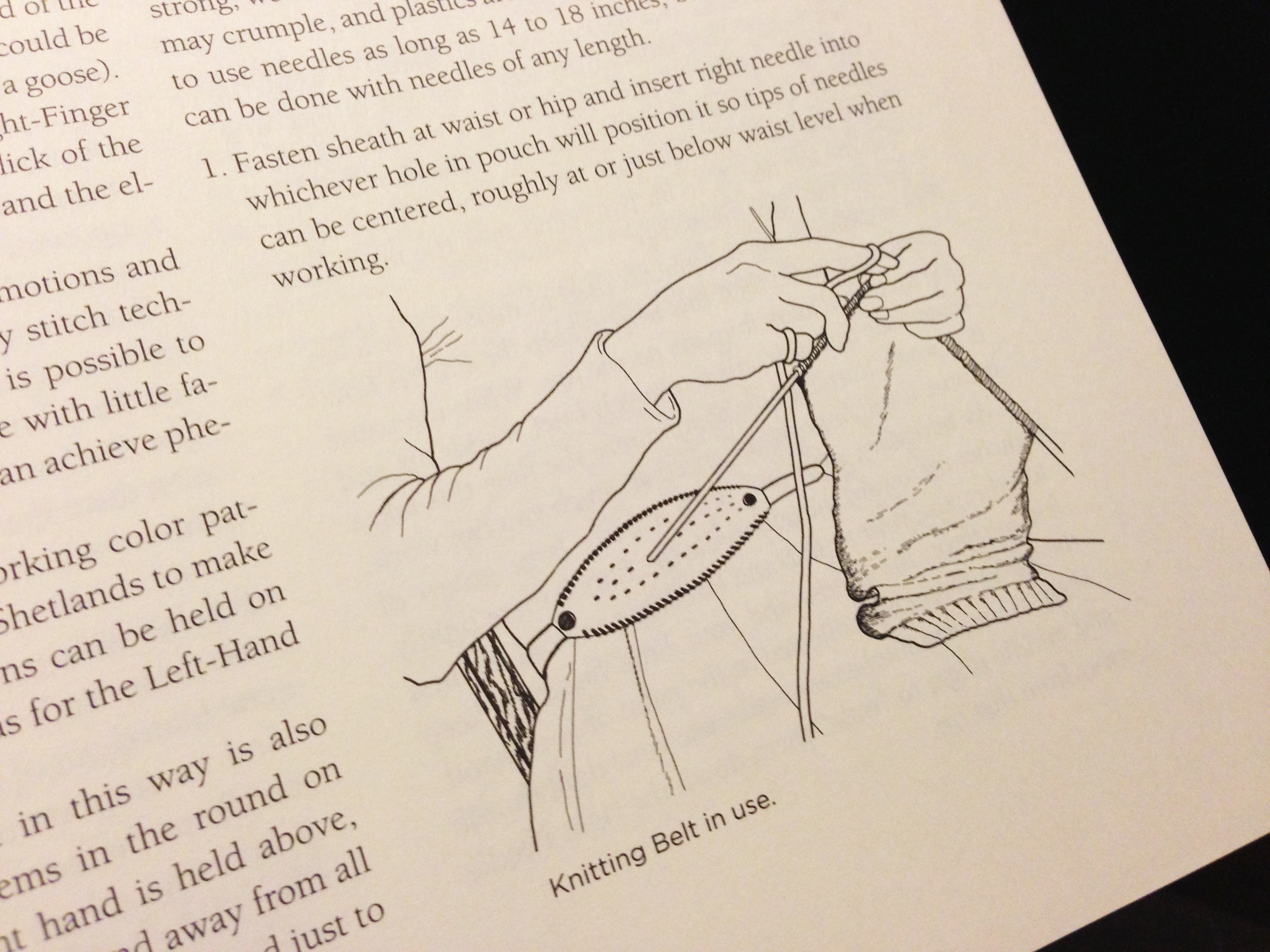
Knitting belt.

Knitting belt.

She has included some fascinating, less common areas of knitting knowledge too. One example is her overview of how to use a knitting belt. Until this book, I had heard of knitting belts in passing but I had no idea what they looked like or how they were used. This method is used rarely now, but it was common in 1800s Britain, which then evolved into ‘parlour style’ knitting. Such a contrast to today’s ‘do you knit English or Continental style?’. I love history, and the historical information about knitting is very interesting.

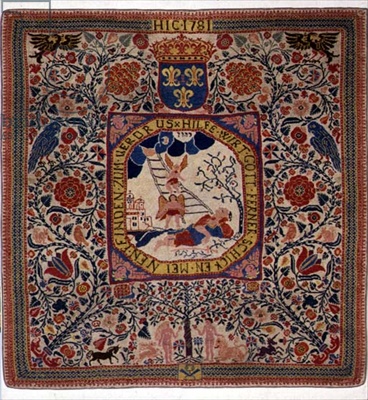
Alsace wool carpet, 1781.

Alsace wool carpet, 1781.

A favourite page of mine in the book (p.266 in case you want to know!) is a photograph of the Alsace wool carpet depicting Jacob’s Dream made in 1781. I love studying this image. The carpet was made using intarsia and a great deal of time and patience. Truly it is the work of a master of intarsia.

Handknitted carpet depicting Jacob's dream, Alsace, 1781 (wool).

Handknitted carpet depicting Jacob’s dream, Alsace, 1781 (wool).

The only drawback to the book is its lack of colour illustrations, but I can see how the costs would be prohibitive. Above is the same illustration of Jacob’s Dream from Alsace, but shown in colour to greater visual impact. I think the use of colour would have gone a long way to support the historical items in this book, as well as the colourwork sections.

However, I wouldn’t let the lack of colour in this book hold you back from picking up a copy of this classic reference work on knitting. At $45.00 a copy, I think it’s a bargain, but you can pick up a copy for less than the list price if you search – Amazon.com has this book listed for about $28.00. You won’t regret having this valuable reference on your shelf and I promise you will refer to it time and again.

x Rena
Covet: Malabrigo Silky Merino Yarn

sm4

I received an exciting package in the post last week. I love packages, especially packages full of yarn. This package didn’t disappoint. And what was in said exciting package? It was stuffed full of Malabrigo’s luxurious Silky Merino yarn. Yummy! I had to play with it immediately, a moral imperative if you will.

sm1

As you do with new yarn, I rubbed it against my cheek – soft as a cloud! Of course, I’ve never tried rubbing a cloud against my face but that’s what I imagine it would be like. The Lavanda colourway looked absolutely splendid, a new colour added to Malabrigo’s extensive colour roster for 2012/2013. Deep, dark purples to hints of dark grey to lavender. I definitely have a purple thing this spring, judging from recent yarn purchases.

sm3

I confess this isn’t my first interlude with Silky Merino. I have said yarn in Sand and Smoke as well. Love! The 51% silk, 49% merino wool sparkles under the light, all 150 yards per skein (50 grams).

sm2

I have to behave myself, show some iota of restraint. I don’t do restraint very well… but yes, restraint. I will have to wait to use this yarn. It’s in a queue for a garment to be released later this year. It’s all I can say. And maybe also that I have to release and submit a couple things before knitting the lovely Silky Merino up into its destined form by the fall.

Meanwhile, I can stack it and put on my office nook shelf to admire and inspire. That doesn’t hurt anyone one bit! Right?  I was saying something about restraint…

x Rena
Finished! Owlets Pullover

Image

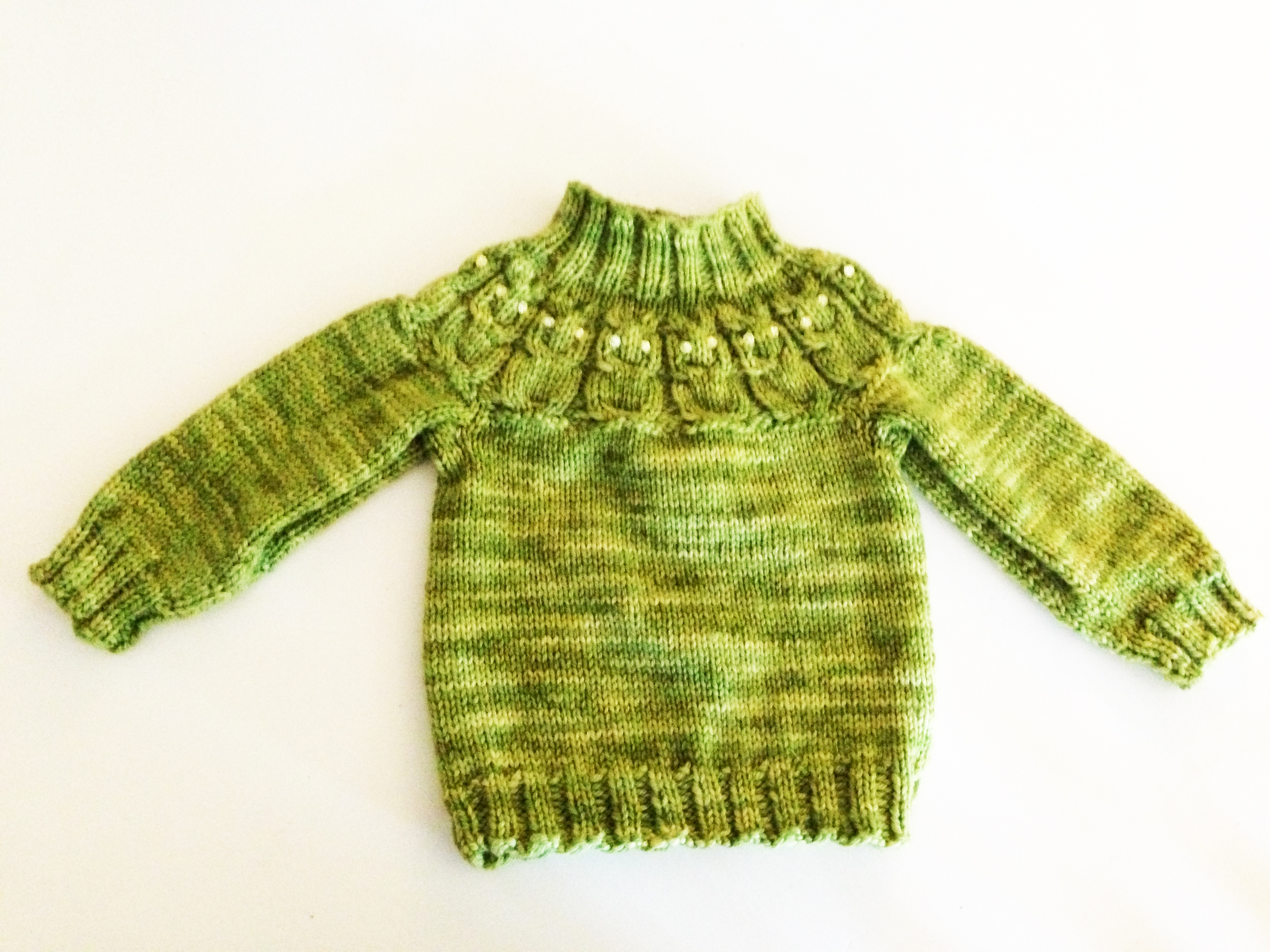
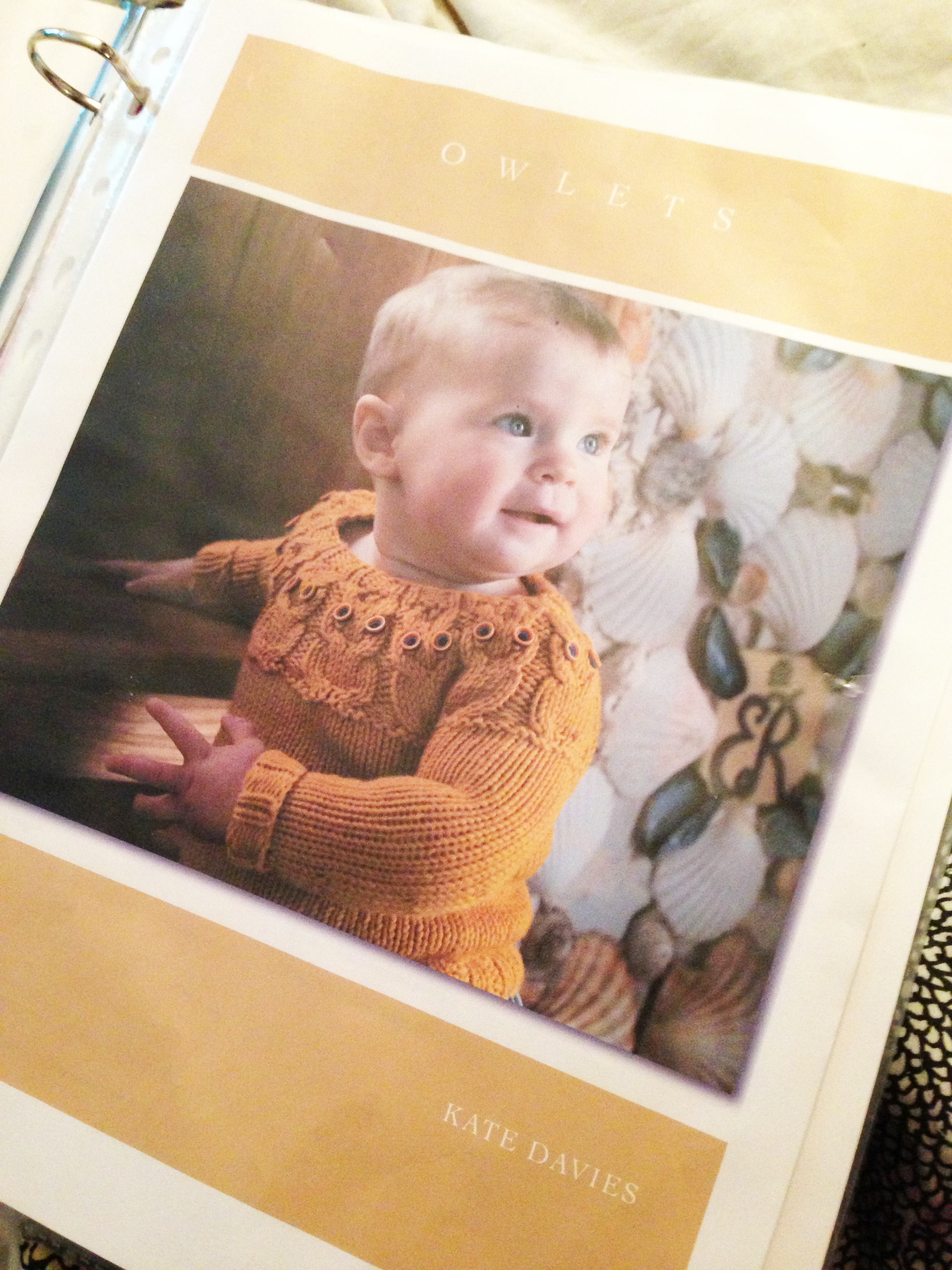
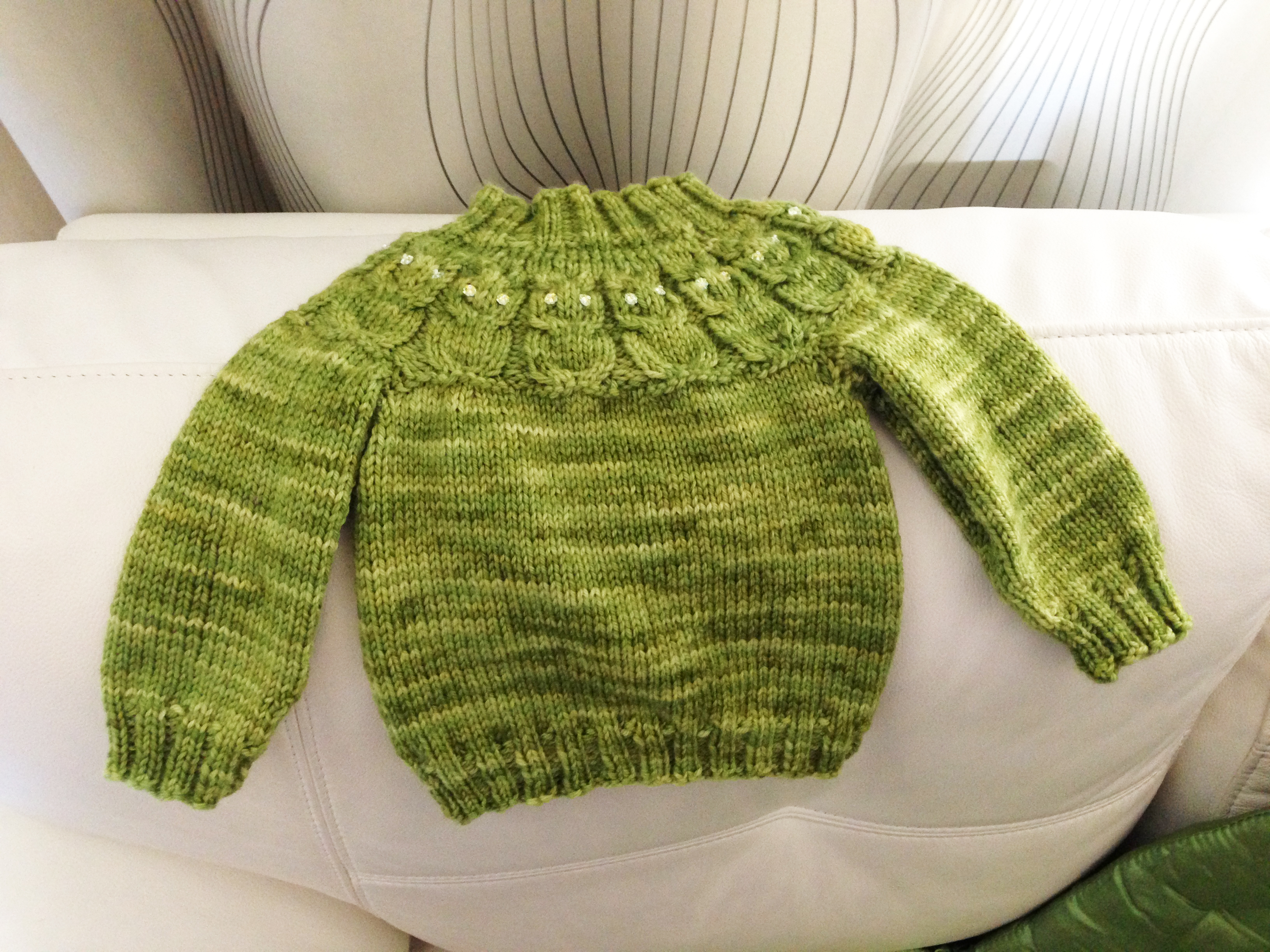
I am pleased to share that I have finally finished knitting an Owlets pullover for a close friend’s baby that was born last month. For those of you who aren’t obsessed with Scottish knitwear designer Kate Davies, Owlets is the infant and child size version of her fiercely popular adult size Owls pullover on popular knitting hub Ravelry.

Don’t worry, I’m not spilling the beans prematurely here – Maia’s Mom has seen the sweater over the magic that is Skype all the way in London, UK from my home in metro Vancouver.

owlet

The pattern was a delight to knit, both well written and nicely laid out. For Maia, the new arrival, I chose a Madelinetosh Rios superwash worsted yarn in a lovely green variegated colourway called ‘Lettuce’. I used most of two skeins. The yarn was so soft! And durable, to keep up with a young baby’s adventures. I chose to knit the 1 year old size, thinking that this will be ready for her first fall / winter later this year. I hope this clever plan works out.

Image

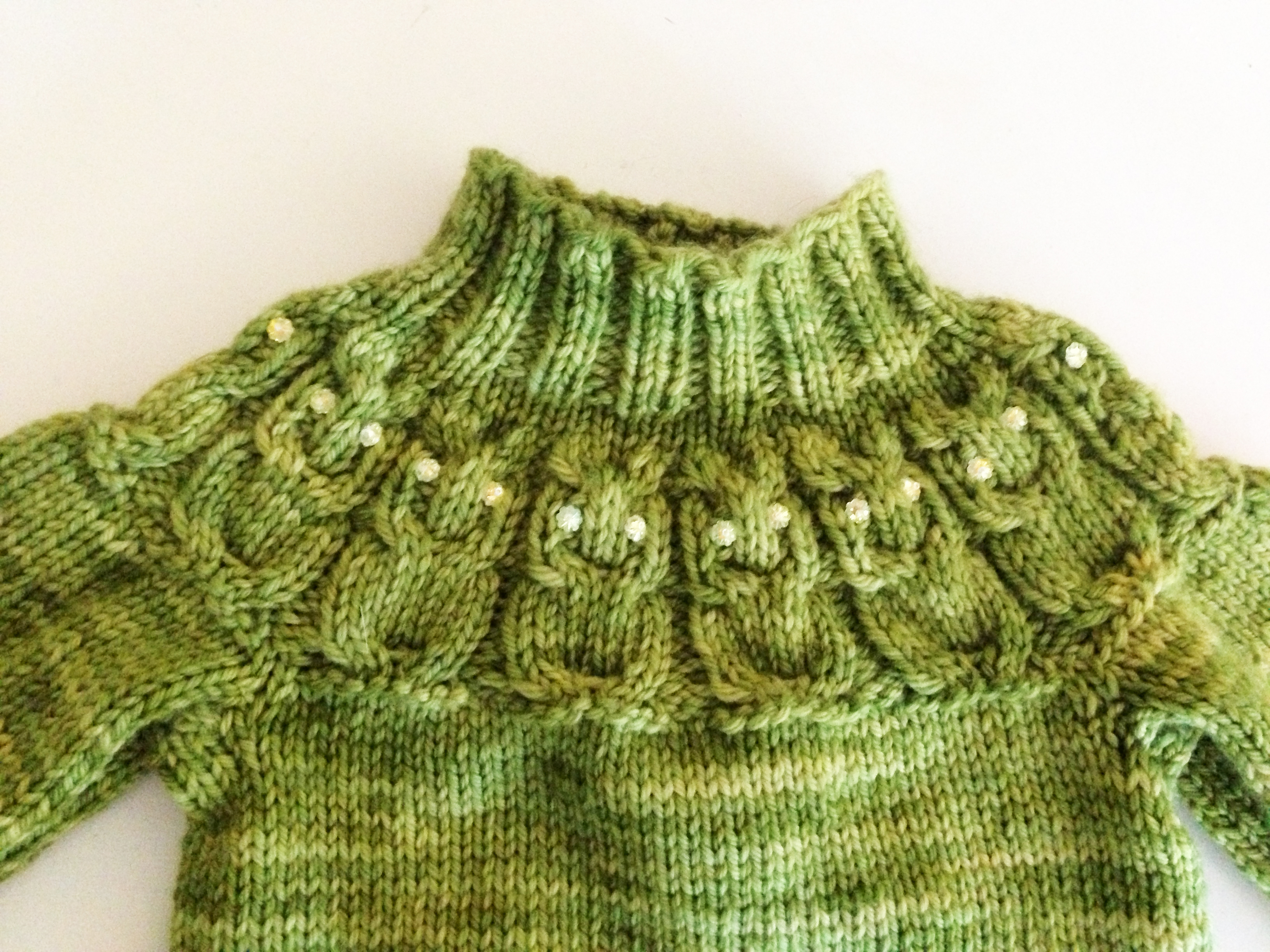
I finished by embellishing the owlet eyes by hand sewing Swarovski crystal flower buttons for eyes, secured with a small bead at the centre where a pupil should be. I am pleased with how they turned out!

Confession time: the package with this pullover should have gone a long time ago, but I was procrastinating on the underarm grafting to take care of the underarm holes made when attaching sleeves to a round yoke. Truthfully, grafting is much more simple than it would first appear. I feel kind of silly for having delayed so long. There was an excellent kitchener stitch tutorial on Knitty to ease the pain of grafting. I felt so accomplished afterward – it really does work.

owlet 1

At last the parcel is truly ready to go, with another surprise in it for good measure. Now that is a secret I can keep.

x Rena
A New Yarn Tale: Mini Maiden

Image

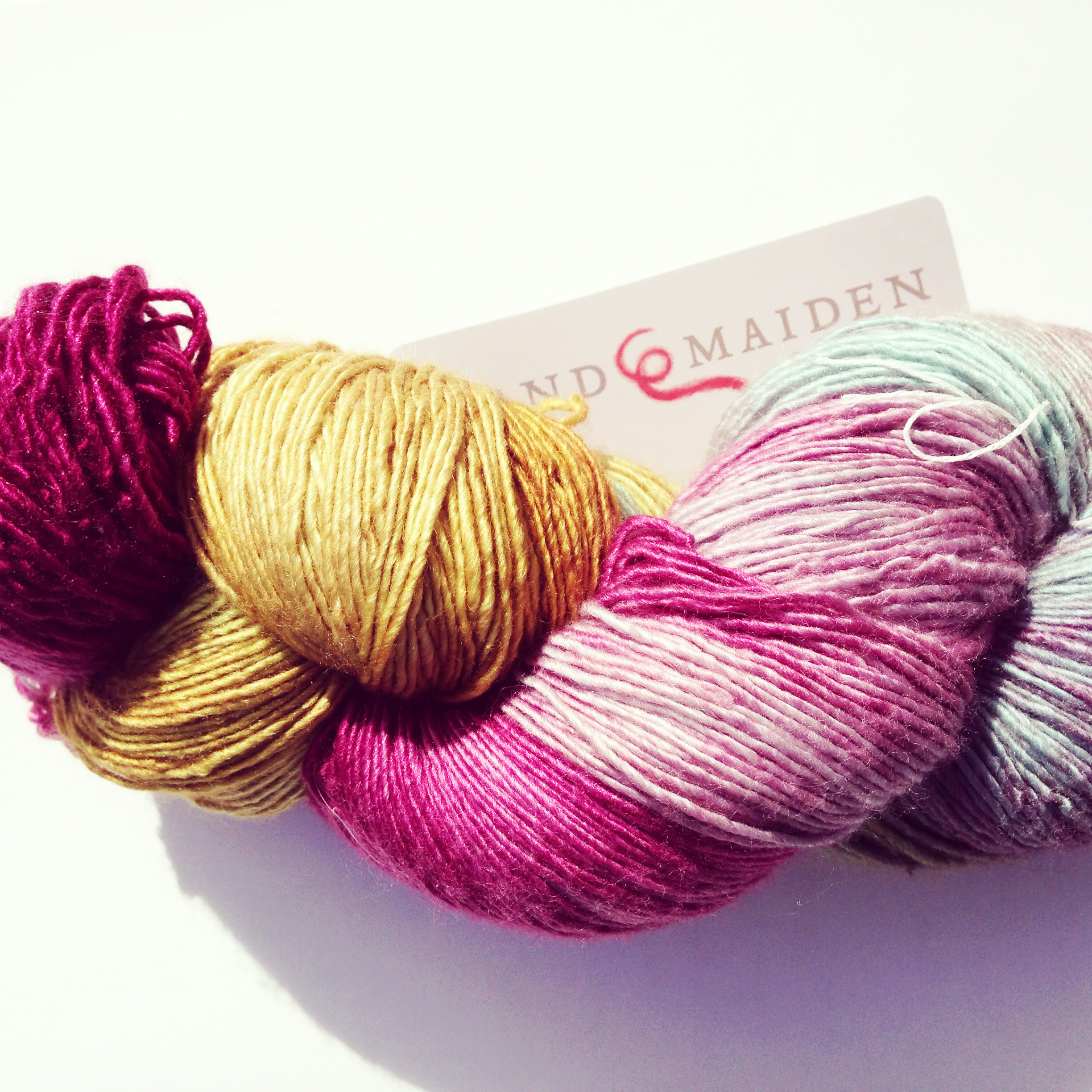
I recently paid a visit to Black Sheep Yarns in Port Moody, BC, specifically on a mission to purchase, and only purchase, a set of circular needles. Black Sheep is a beautiful shop and I love looking at just about everything each time I visit. As often happens, I was suckered into taking a new skein home with me. I tried to resist its charms, but like the Borg, resistance was futile.

As I tried to be virtuous, there was this skein… she was a vision amid all the lace and fingering weight yarn in the display. I tried to lap the shop a couple of time to shake her, but I kept coming back. Finally, I picked up the skein and I knew it was the deal was sealed.

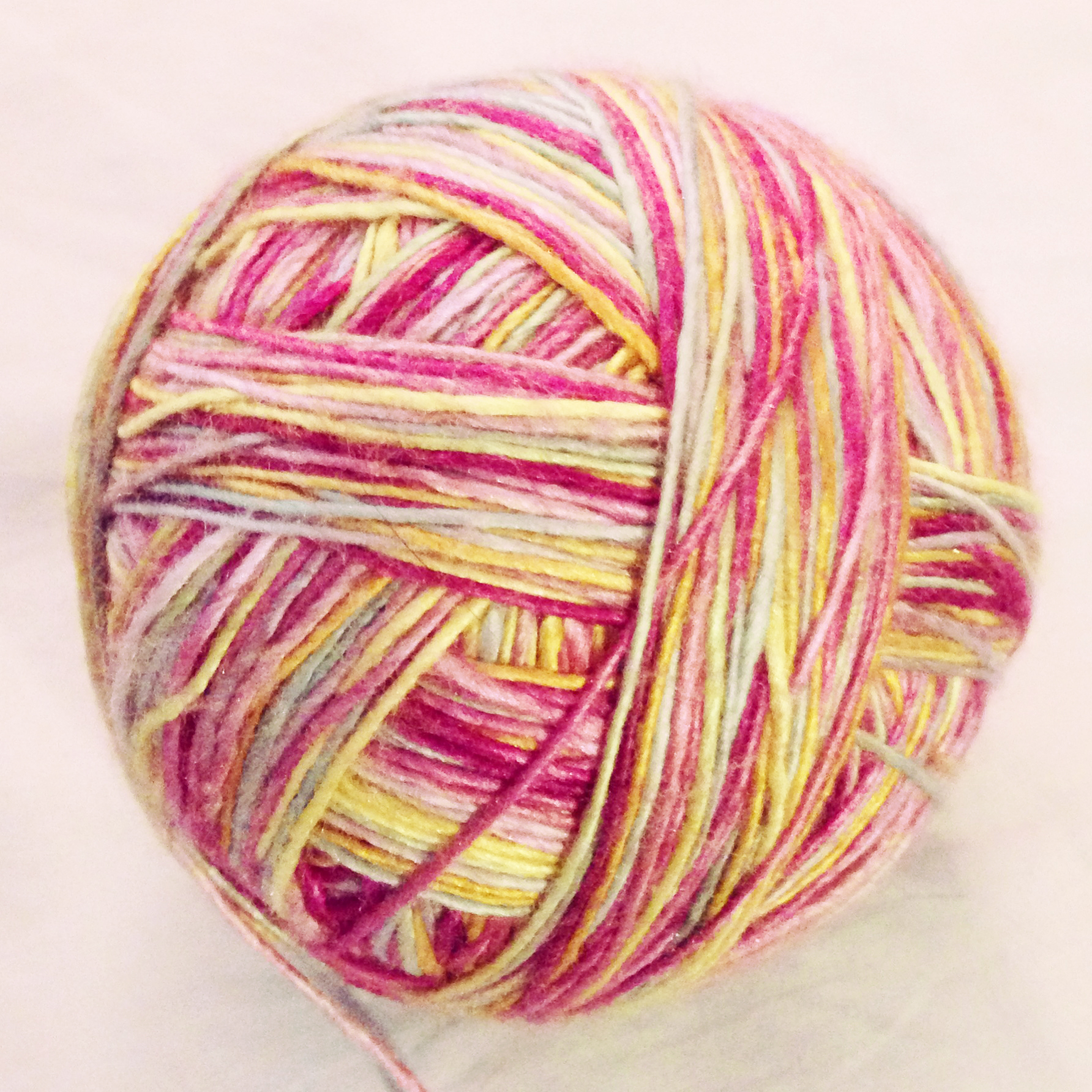
And what tempted me so badly? It was a skein of fingering weight by Canadian company Handmaiden Fine Yarn. Specifically, it was a hand-dyed Mini Maiden variegated skein in the Sugarplum colourway. The colours were glorious, a deep magenta, gold, and palest blue-green. The yarn also had a wonderful sheen, and as suspected, the yarn is half silk, half wool. Perfect! I am a total sucker for silk in yarn, believe me.

I came home and I needed to play with this yarn (and yes, in case you’re wondering, I also purchased the needles I set out for). It was necessary. So I promptly made a nice ball of yarn.

Image

I admired the yarn some more. It was delightfully soft. So soft!

Of course, by then I couldn’t just leave the yarn alone. A new design project came to mind… and it’s now incubating. I can’t wait to share the results with you soon.

I do wholeheartedly recommend picking up your own Mini Maiden to play with.

x Rena


Spring Beach Update… Err, Knitting Update

Image

Crescent Beach on a crisp spring day.
I must get better at blogging more regularly. I promise I will. As is usually the case around here, things have been rather busy. But not too busy to get to my favourite beach for a walk or two. Getting outside and into nature always gives me new ideas, from colour to texture to shape.

Image

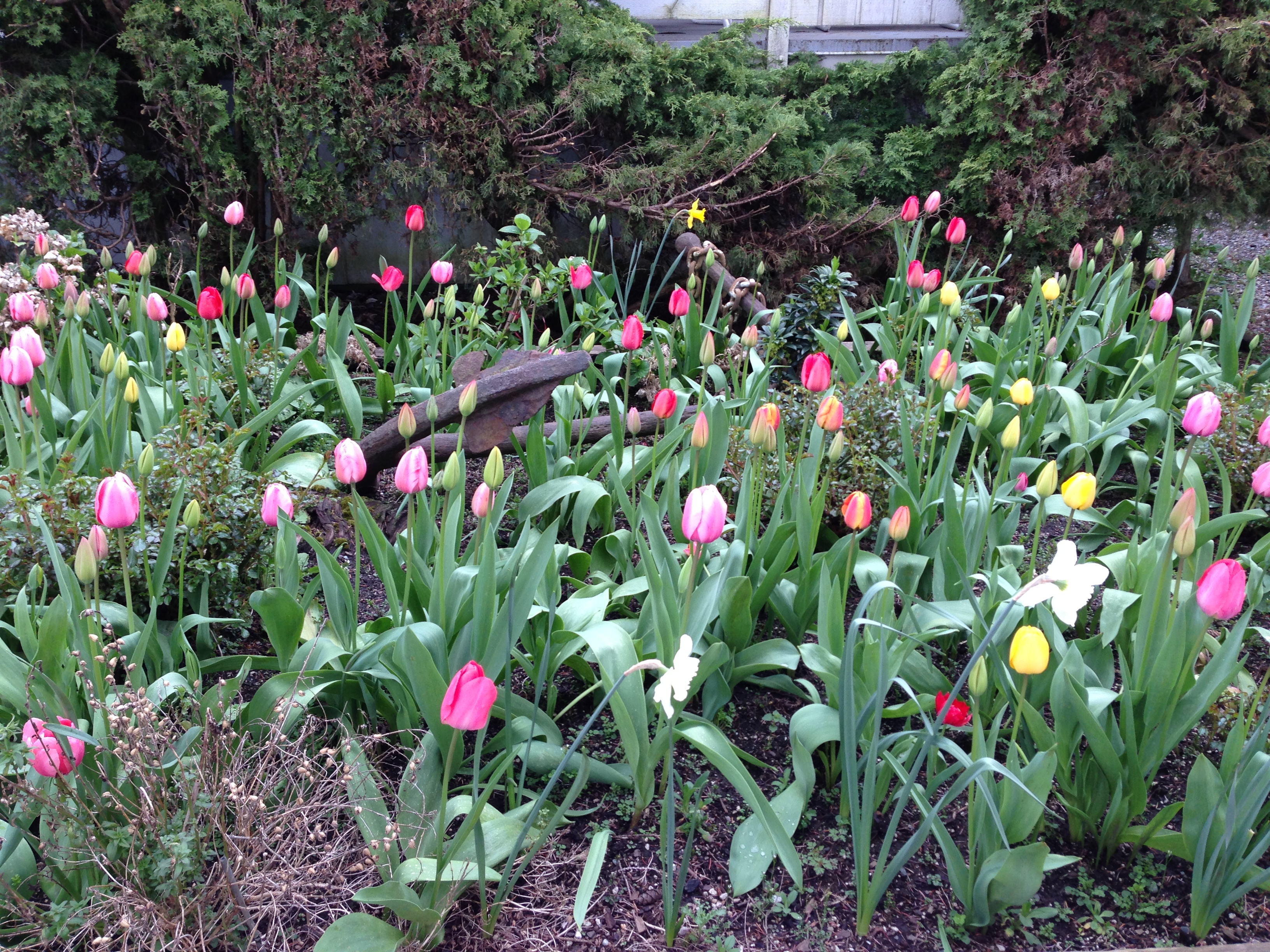
A riot of tulips.


I saw a garden full of tulips that was an amazing sight to behold. Truly there were tulips in all the spring colours filling someone’s back garden. I was delighted. In the centre of the photo lies a very large anchor.

ImageIn another garden, an anemone was in bloom, looking gorgeous. I can’t see anemones without thinking of being in Greece, which was the first place I had ever seen anemones growing – and in the wild, too. I think this anemone has really inspired me in terms of colour this spring.

Image

Also growing quietly in the same garden was a crop of mushrooms hidden behind daffodils. The mushrooms looked like they had been stretched and seemed somewhat mystical.


Image

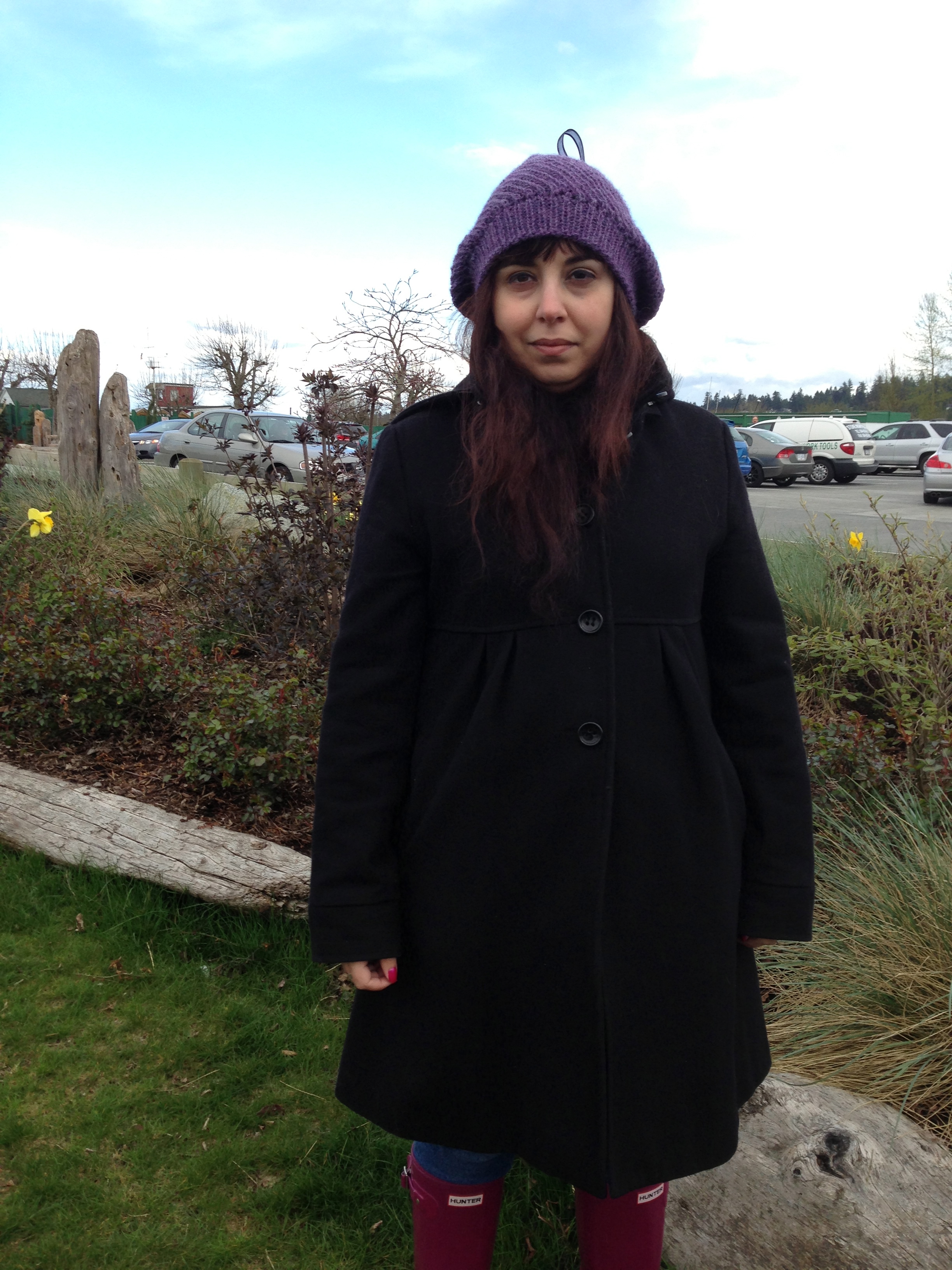
Despite the serious expression (honestly, I don’t really like having my photo taken), I really enjoyed the fresh walk earlier in the month. If you look closely, I’m wearing my sample for the new Granville Hat, which will be released in early May. The hat kept me warm against the beach breeze!

Granville has been been tended to by my lovely tech editor and my wonderful test knitters. I’m in love with the nearly anemone coloured alpaca yarn by DROPS that I used to knit up the sample. I promise to blog more about Granville for its release.

Image

This photo is a clue for the secret project. Admire the Herdwick sheep.

My secret project is coming along well, too. I’ve finished the sample and the photography with the kind assistance of undisclosed helpers. The pattern is off to the tech editor and I’m aiming to release the hat mid-May. I’m pretty thrilled with the result.

The book project is also humming along. There will be a photoshoot or two in May to show all the pattern samples that will be in the book. I’m excited about this and trying to figure out some locations for the shots.

There’s always a few more things up my sleeve too. But in the meantime, enjoy the gorgeous spring out there.

x Rena